Overall Solution for Solar Panel Mounting Brackets
Share
Overall Solution for Solar Panel Mounting Brackets
As the "backbone" of photovoltaic systems, solar panel mounting brackets directly dictate the installation stability, energy conversion efficiency, and service life of solar panels, serving as the core hub connecting photovoltaic modules to installation carriers (roofs, ground, water surfaces, etc.). Focusing on their core functions and diverse adaptation needs, this solution provides a full-scenario, cost-effective, durable and flexible mounting bracket solution, centered on Features, Core Advantages, and Application Scenarios, adaptable to photovoltaic projects of all scales and environments.
I. Features
Integrating advanced materials and modular design, the brackets balance stability and installation convenience, with four core features:
1. High-Strength & Corrosion-Resistant Material
Mainly made of anodized aluminum alloy (lightweight, suitable for roof installation) and hot-dip galvanized steel (super durable, anti-corrosion), they withstand harsh outdoor environments and have a 25+ year service life, consistent with photovoltaic modules.
2. Modular & Adjustable Design
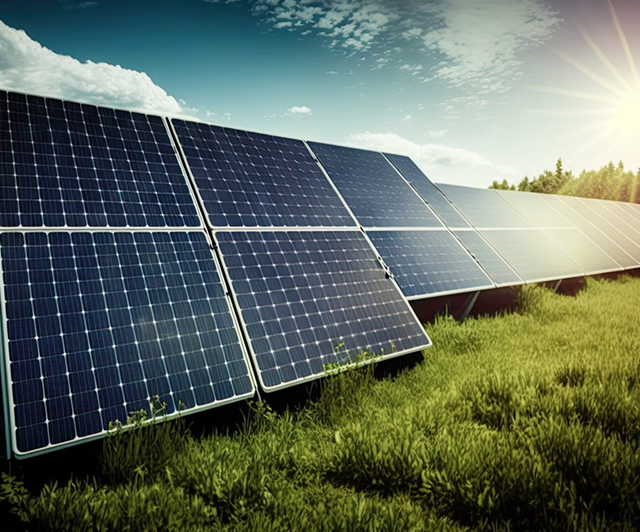
Modular design enables quick assembly without welding/cutting, reducing labor costs and construction time. With 0°-60° angle adjustment, they can be optimized according to local latitude to maximize solar absorption and power generation efficiency.
3. Excellent Compatibility
Compatible with all standard photovoltaic modules (monocrystalline, polycrystalline, thin-film) and installation carriers, and can be matched with auxiliary components to meet personalized project needs.
4. Safety & Reliability
Designed to international standards, they pass load-bearing/wind resistance tests (withstand level 12 winds and heavy snow). Waterproof/anti-slip connection points avoid carrier damage (e.g., roof leakage).
II. Core Advantages
Compared with traditional brackets, they have four obvious advantages:
1. Cost-Effective
Modular design reduces installation costs; durable materials lower maintenance costs; adjustable angles improve efficiency, reducing the whole-life cycle cost of photovoltaic projects.
2. Strong Environmental Adaptability
Suitable for high-temperature, coastal, cold and windy areas, as well as sloping roofs, uneven ground and water surfaces, solving special environment installation difficulties.
3. Easy Installation & Maintenance
Simple tool assembly (no professional welding required); damaged components can be replaced independently without disassembling the entire system.
4. Energy-Saving & Environmental Protection
Recyclable materials meet green energy concepts; optimal angle design maximizes solar utilization, reducing reliance on fossil energy.
III. Application Scenarios
Widely applicable to various photovoltaic projects, including:
1. Residential Roof Projects
Suitable for residential sloping/flat roofs, adopting lightweight aluminum alloy brackets to avoid excessive roof load, meeting residents’ daily electricity needs.
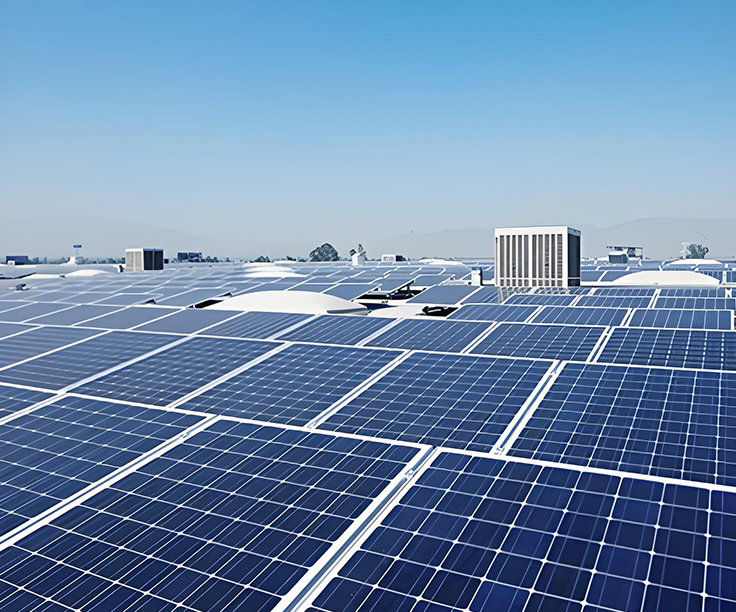
2. Commercial & Industrial Roof Projects
Applicable to commercial/industrial building roofs, using high-load-bearing hot-dip galvanized steel brackets for large-area installation, minimizing impact on normal operations.
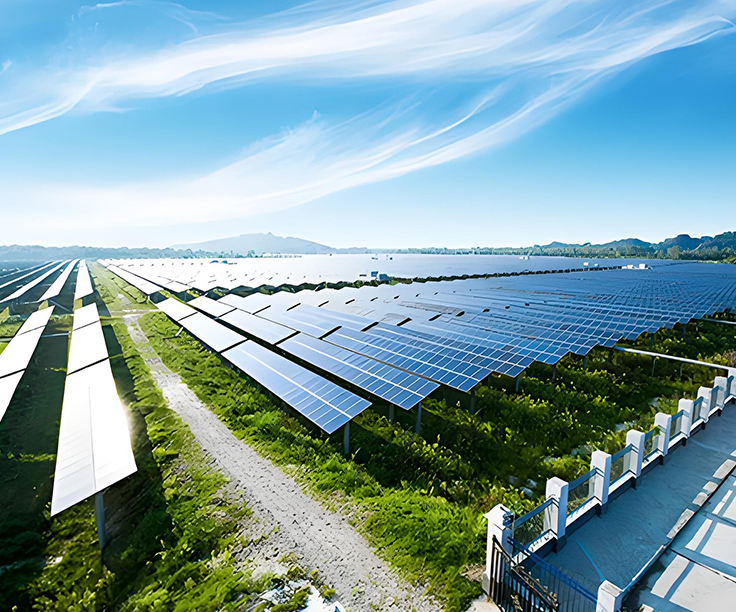
3. Large-Scale Ground Power Plants
Core scenario for idle wastelands/deserts, using height-angle adjustable ground brackets to support large-scale centralized installation.
4. Water Surface Power Plants
Suitable for reservoirs, fish ponds and lakes, adopting corrosion-resistant brackets to adapt to water environments, realizing green power generation on water.
Latest Solution